
The Situation & Challenge
An EPC developer approached us during the tender stage of a rooftop solar project with limited verified site information. The only documents available were structural drawings, with no verified roof photographs or confirmed obstruction (obstacles height) data. Locations of ridges, AC units, walkways, and access paths had to be estimated using engineering judgment, since the building was still under construction and a site visit or drone survey was not possible.
The client had a target kWp capacity that needed to be achieved on the roof. Reaching that target using unconfirmed inputs, while still keeping the design realistic for actual installation, became the core challenge.
The design had to be technically reliable enough to support a competitive tender submission, and it had to be delivered within a tight deadline, leaving no room for iterations.
The 4Solar Global Approach
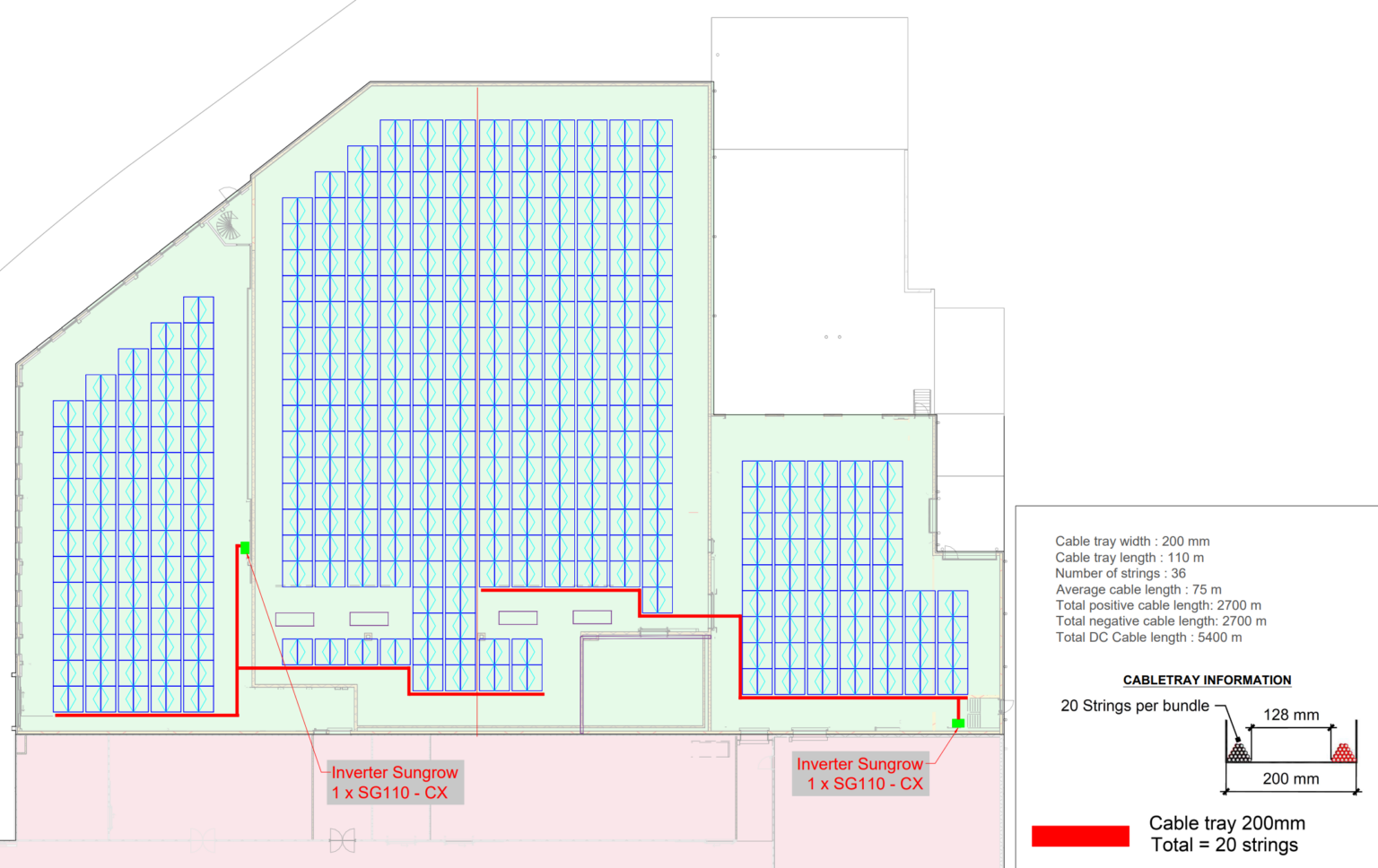
We studied the structural drawings closely to map usable roof areas, then applied practical engineering assumptions for keep out zones for machines on the roof, walkways, and access paths for the maintenance of the roof top machines to ensure the layout would hold up during actual installation, not just on paper.
Module selection was deliberate. From the options provided by the client, we chose the module that offered the best Wp/m² ratio while staying within row pitch constraints. This gave us the best chance of reaching the target capacity without compromising spacing or structural logic.
The result was a layout that maximised available roof space, met the required capacity target, and remained genuinely executable, giving the client something they could stand by in a competitive bid.
The Outcome
We delivered the tender-ready layout within the required deadline. The design was technically sound and well documented, allowing the client to submit their bid with confidence and ultimately win the tender.
What followed was equally significant. Because we had already worked through the structural drawings and engineering assumptions during the tender stage, the detailed engineering package was completed within one week of bid award. The groundwork laid under deadline pressure became the foundation for rapid execution.
Closing Thought
In tender-stage projects, decisions often need to be made with incomplete data. The ability to translate limited inputs into reliable, execution-ready concepts can make the difference between winning and losing. And when the bid is won, being already deep into the engineering means the project doesn’t pause, it accelerates.