

The Situation & Challenge
A solar installer in the Netherlands approached 4Solar with a partially completed rooftop solar design that needed to be converted into a fully compliant engineering package.
The available inputs included an initial ballast layout prepared using aerial roof imagery and a few project details. However, the project still lacked complete electrical design, cable routing, inverter placement planning, and the engineering documentation required for Scope 12 compliance.
The challenge was to strengthen and complete the engineering while preserving as much of the client’s original layout as possible, avoiding unnecessary redesign effort and keeping the project moving within a tight timeline.
The 4Solar Global Approach
We used the client’s ballast layout as the engineering foundation and developed the complete system around it while keeping layout changes to a minimum.
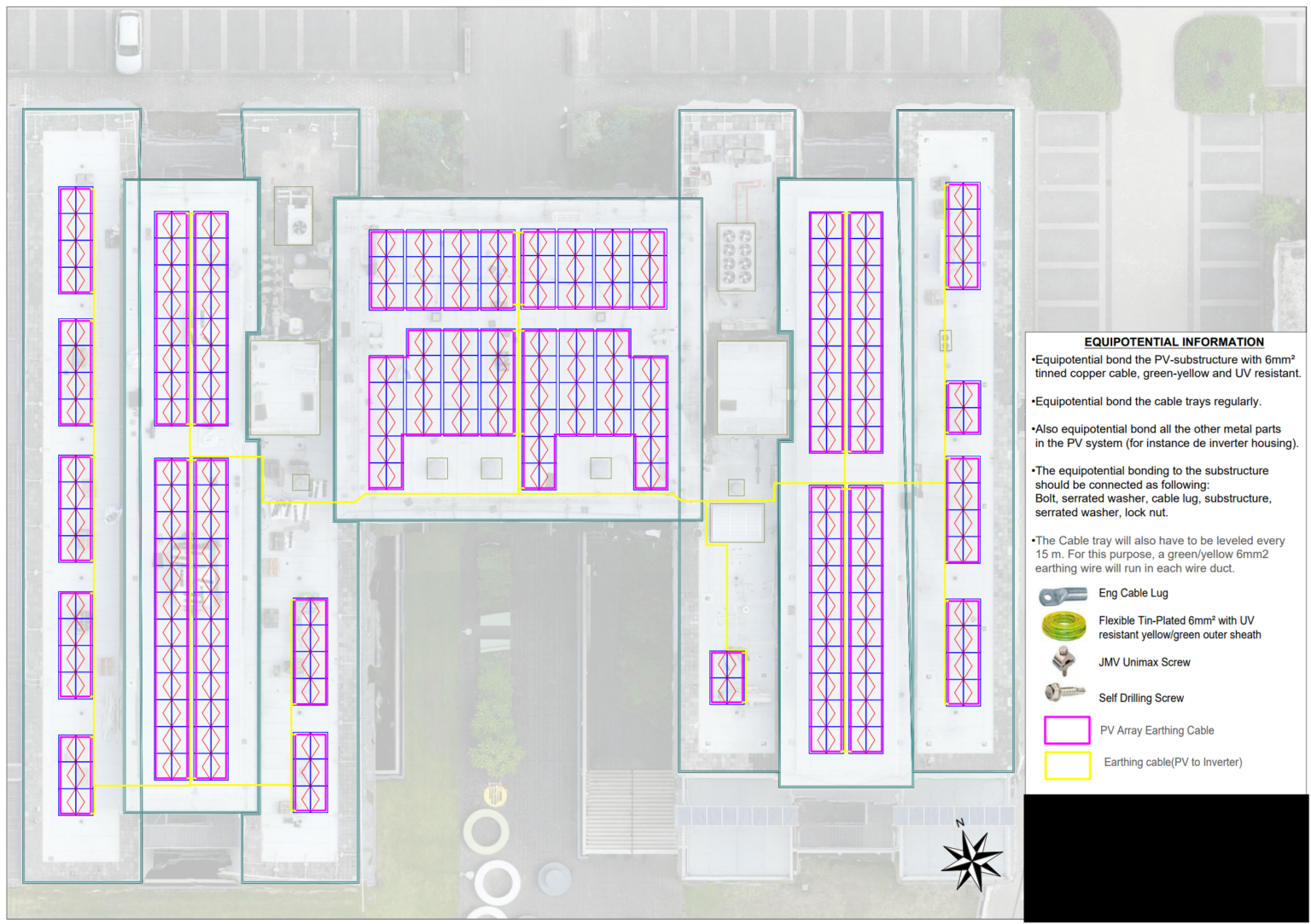
The module layout was recreated in AutoCAD, followed by inverter configuration, string design, cable routing, SLD preparation, equipotential bonding layouts, and PVsyst analysis.
During the engineering process, we identified practical installation risks related to cable tray routing and rooftop obstacles. Adjustments were made to approximately 5% of the layout to improve installation feasibility without significantly changing the original plan from the client.
We also coordinated closely with the installer’s site team and external electrical consultant to align inverter placement and electrical execution requirements before installation began.
The Outcome
We delivered the complete Scope 12 compliant engineering package within one week, enabling the client to move forward quickly without delays.
At the same time, nearly 95% of the original ballast layout was retained, reducing redesign effort while improving the technical reliability and installation practicality of the system.
Beyond the deliverables
By converting a partial ballast layout into a fully engineered and compliant design package, the client was able to bridge internal engineering gaps without expanding internal teams, investing in additional software, or restarting the project from scratch.